At exhibitions, my staying power is short. Half an hour, and then however big the exhibition is, I want to be in the gift shop. But, at a huge noh exhibition held in a Ginza department store to celebrate Zeami's 650th anniversary, I broke my own rule and stayed for over an hour!
My sudden surge of energy was mainly because of the masks they had on display. Normally, you're lucky if you get to see one priceless relic mask close up. At this exhibition there were about 50 of them, all almost close enough to touch. Noh masks are unsettling - expressionless, but full of a vitality that is completed once the actor is wearing it. My favourite was the old woman who remembers being beautiful, higaki onna.
In full lighting viewed straight on, she looks shocked - perhaps a bit annoyed. Angled slightly this way or that - totally different. Lights don't usually go down in a noh performance so the actors' very subtle gestures have to do all the work. But the effects are even more dramatic with stage lighting. This week, on the stage of a fusion performance I went to at Tokyo's Spiral Hall, the lone noh actor was wearing this very mask. During the show, he had filled the stage with a fizzing energy even though he was sitting still most of the time. But when the lights started to fade, the mask, and the character, seemed to turn to stone and disappear. All in absolute stillness.
I've been reading quite a bit about noh masks lately, and the more I read, the more fascinating they become. Best of all was an article I came across in No/Kyogen Masks and Performance, about the actor's relationship with the mask, an interview with Udaka Michishige, an important shite main actor in the Kongo school of noh. Where there is a choice of masks for a particular play, he, like lots of other noh actors, implies that to a surprisingly large extent the mask chooses its actor - for him to be comfortable wearing it, there was to be a degree of 'right' ness about the mask, which fits its bearer. This was particularly interesting coming from Michishige, who is both mask-maker and noh actor.
In another article in the same book, the late Kanze Hisao explains a bit more about the unusually intimate relationship a noh actor has with his chosen mask before and during a given play. Masks don't turn a character into a type as they do in Greek theatre or other masked drama - rather, they become one with the wearer, his 'companion' in the piece. The mask strives for some sort of universality - so it's the mask and not the bare face that is supposed to represent the more 'human' of the characters when its representing a dead person.
All this, from one exhibition?! Perhaps I'll stay a whole hour at the next one, too. But, it'll have to be pretty good.
Friday, 25 January 2013

Monday, 21 January 2013
Noh Notebook: Noh, Snow, Tokyo
Even though I'd already seen one performance of Okina at the Kita Noh Theatre, I decided it would be a good idea to go and see another one organised by a different guild. Well, it seemed like a good idea until I looked out of the window on the morning of the show, to a full-blown snowstorm. Later - wet, cold, late, and out of chocolate - I arrived at the Kanze Noh Theatre after an hour's battle through Tokyo's first all-day snowstorm in 20 years. This play was going to have to be good.
In this theatre, latecomers (which this time included about a quarter of the audience who, like me, had to dig themselves out of snowdrifts to get there) always end up sitting not facing the front of the stage...

...but sitting beside the bridgeway, looking into stage right:


I even had time to look up at the stage roof, decorated for new year and with its corners and layers all much easier to see under the theatre space's real roof, from where I was sitting.
Add to that a brilliant interlude where the Ai Kyogen comes on dressed up - and, unusually for this [in some people's opinion, lower] class of actor, masked - as 'a not-very-important god from a lesser shrine' to tell the story...

...and an utterly mesmerising solo shimai (solo dance in plain kimono done out of the context of the play it comes from to show off technique) of the thrilling final dance in one of my favourite plays, Ama (The Diver). All in all - 'good' and 'worth it' didn't quite cover it.
I skipped home - or tried to - only slipping over a couple of times on three-inch thick sludgy ice in a pair of trainers made for a summertime outing to the park.
Another fine noh day!
In this theatre, latecomers (which this time included about a quarter of the audience who, like me, had to dig themselves out of snowdrifts to get there) always end up sitting not facing the front of the stage...

...but sitting beside the bridgeway, looking into stage right:

The view was so completely different that it felt like a different play entirely even though the performances varied only subtly. It was gratifying this time to be able to see the arms of Okina's three kotsuzumi players working, from the side:

The next play was Genjo, a story about two famous lute players (one alive, one dead): huge cast (for noh - maybe 20 people) but the actual lute only appeared at the very end. The pillar downstage right separated two of the central characters and made for interesting viewing:

Add to that a brilliant interlude where the Ai Kyogen comes on dressed up - and, unusually for this [in some people's opinion, lower] class of actor, masked - as 'a not-very-important god from a lesser shrine' to tell the story...

...and an utterly mesmerising solo shimai (solo dance in plain kimono done out of the context of the play it comes from to show off technique) of the thrilling final dance in one of my favourite plays, Ama (The Diver). All in all - 'good' and 'worth it' didn't quite cover it.
I skipped home - or tried to - only slipping over a couple of times on three-inch thick sludgy ice in a pair of trainers made for a summertime outing to the park.
Another fine noh day!
Tuesday, 8 January 2013
Noh Notebook: Manhattan / Okina, New Year 2013
Last year, in Tokyo, I was the lowly Curtain Lifter for the play Manhattan Okina. This year, I was promoted to Actor! In Kimono!

My first play in Tokyo! Well, ok, it wasn't QUITE in Tokyo. It was in a big old house/museum/theatre in the gorgeous gardens of Sankei-en in Yokohama. There was no-one there when we arrived an hour before the start of our first of three performances, but within half an hour, the place was packed, and stayed packed for the rest of the day.
It's a small play, and the story if you can call it that, is simple: three old men (actually one woman dressed as a Buddhist priest, donning three different masks in turn) see flowers at the moment of their deaths, and are welcomed to heaven by a Flower Spirit as Okina gods so they can protect and guide people who might otherwise be ignored.
You could say the same thing about the original Okina, one of the oldest plays still performed in Japan. It's more a blessing than a noh play. What you remember about it is the joyous drumming and the songs - not the dancing or the story, which you can read before you even start...

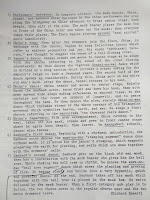
...and then completely forget about, and enjoy it just as much.
Coming out of the Kita Noh Theatre on Sunday 6th January, for the first time in six months, after seeing Okina and the sumptuous Arashiyama (another play about flower spirits) I couldn't help but feel festive. I'm still not allowed to take photos, but my pen had clearly decided it didn't care:

My first play in Tokyo! Well, ok, it wasn't QUITE in Tokyo. It was in a big old house/museum/theatre in the gorgeous gardens of Sankei-en in Yokohama. There was no-one there when we arrived an hour before the start of our first of three performances, but within half an hour, the place was packed, and stayed packed for the rest of the day.
It's a small play, and the story if you can call it that, is simple: three old men (actually one woman dressed as a Buddhist priest, donning three different masks in turn) see flowers at the moment of their deaths, and are welcomed to heaven by a Flower Spirit as Okina gods so they can protect and guide people who might otherwise be ignored.
You could say the same thing about the original Okina, one of the oldest plays still performed in Japan. It's more a blessing than a noh play. What you remember about it is the joyous drumming and the songs - not the dancing or the story, which you can read before you even start...


...and then completely forget about, and enjoy it just as much.
Coming out of the Kita Noh Theatre on Sunday 6th January, for the first time in six months, after seeing Okina and the sumptuous Arashiyama (another play about flower spirits) I couldn't help but feel festive. I'm still not allowed to take photos, but my pen had clearly decided it didn't care:
 |
| Okina |
 |
| Arashiyama |
It is a Happy New Year.
Tuesday, 20 November 2012
Nohkan - The Noh Flute
The flute - called a 'Nohkan' - is the instrument that begins a noh play and signals the entrances (and sometimes the exits) of characters. There are particular forms for the moments before the play starts, and for the entrances of different kinds of characters - both human and supernatural. Unlike wind instruments in other musics, the noh flute is part of the rhythm section - it leads the drummers and the singers, giving them a reference point around which to base their timings (which, in turn, are based on the actor's own timing). This clip is the Nohkan entrance music for the first character in the play Sumidagawa.
Wednesday, 12 September 2012
Spitalfields, Sumidagawa, Sound
Christchurch Spitalfields: I can't think of a more brilliant and imposing location for a
theatrical production.

I've wanted to see something there for years. But, when I went there to see my first London Noh - Sumidagawa in double bill with Britten's Curlew River - last Friday (after I'd got over the excitement of actually being inside it, having walked past so many times) I realised that it's only a brilliant location if the church itself has a leading role in the play. My experience of the play was interesting but strange. The church altered the play much more dramatically than I was expecting, so that it became almost unrecognisable from the noh I've studied and loved this past year. And it was almost all because of Sound.
The inside of any big church would have been a good five times as high as a normal enclosed noh stage's roof: Hawksmoor's cathedral-like masterpiece was even higher. A noh stage is its own special contained space, predictably the same everywhere - a roofed, pillared building 6 metres square, with a walkway extending diagonally from back stage right:

In some of the bigger venues in Japan, the noh stage is built as a separate entity within an existing 'normal-shaped' auditorium. At the National Noh Theatre, the noh stage looks like a giant set piece for some huge production or other:

To look at, the organisers had done a brilliant job creating a noh-friendly playing space - raised, closed off at the back and one side, with an entrance that functioned pretty well as a bridgeway. But there wasn't much they could do about the echo. In a church, sound bounces off stone like it's playing a very energetic kids' ball game:

On a noh stage, noises sink - into the polished cypress floor and solid back of the stage, and into the close layered tiling of the roof. Sounds under a lower part of that roof, where the drummers and flautist sit, sound quieter and disappear faster - under the high part, louder. The only reverberant sound happens on the pretty rare occasions when the actor deliberately stamps as part of a dance - a deep but contained sound created by huge urns under the floor. But even that fades after about a second. At Christchurch, the 'hit' sounds (stamps and drums) became even more eerie and exciting than they usually are. They sounded...and sounded...and sounded. But the voice of the main actor - always quieter anyway because there is a wooden mask between between him and the audience, but full of richness and depth - was often lost behind them.

It was brilliant to be able to see a noh play in London, in a church I'd always wanted to be inside. But for me, the relationship between the music and the voices, interesting though it was, was just too different to how it 'should' sound for me to get used to it in the just over an hour in which the play ran. I heard afterwards that the feeling was even more pronounced for the actors themselves: I think they were trying to compensate for the longer, more confusing reverberation by going more slowly. But since there is so much microtonal vibrato in a noh voice (which you need on a noh stage to liven up the rather dead acoustic, or, when the stage is outside, to stop the voice from disappearing off into the distance) it just meant that Christchurch's walls and floor and curlicues, and roof, had even MORE fun. Gah!
So, I was all set to start hating the church for what it had done to the noh. But then Curlew River started. Britten was heavily inspired by Sumidagawa when he wrote the opera - the narrative is almost exactly the same - but the whole thing (and especially this production with its busy staging and relatively naturalistic acting) plays very much from a western tradition. A line of men file onto the stage at the beginning, singing a latin hymn in unison. And it was utterly beautiful (as was much of the rest of the opera, musically). I finally realised why its's so important for choral voices to have such a pure, bell-like quality. The church does the rest, whether you like it or not.

I've wanted to see something there for years. But, when I went there to see my first London Noh - Sumidagawa in double bill with Britten's Curlew River - last Friday (after I'd got over the excitement of actually being inside it, having walked past so many times) I realised that it's only a brilliant location if the church itself has a leading role in the play. My experience of the play was interesting but strange. The church altered the play much more dramatically than I was expecting, so that it became almost unrecognisable from the noh I've studied and loved this past year. And it was almost all because of Sound.
The inside of any big church would have been a good five times as high as a normal enclosed noh stage's roof: Hawksmoor's cathedral-like masterpiece was even higher. A noh stage is its own special contained space, predictably the same everywhere - a roofed, pillared building 6 metres square, with a walkway extending diagonally from back stage right:

In some of the bigger venues in Japan, the noh stage is built as a separate entity within an existing 'normal-shaped' auditorium. At the National Noh Theatre, the noh stage looks like a giant set piece for some huge production or other:

To look at, the organisers had done a brilliant job creating a noh-friendly playing space - raised, closed off at the back and one side, with an entrance that functioned pretty well as a bridgeway. But there wasn't much they could do about the echo. In a church, sound bounces off stone like it's playing a very energetic kids' ball game:
On a noh stage, noises sink - into the polished cypress floor and solid back of the stage, and into the close layered tiling of the roof. Sounds under a lower part of that roof, where the drummers and flautist sit, sound quieter and disappear faster - under the high part, louder. The only reverberant sound happens on the pretty rare occasions when the actor deliberately stamps as part of a dance - a deep but contained sound created by huge urns under the floor. But even that fades after about a second. At Christchurch, the 'hit' sounds (stamps and drums) became even more eerie and exciting than they usually are. They sounded...and sounded...and sounded. But the voice of the main actor - always quieter anyway because there is a wooden mask between between him and the audience, but full of richness and depth - was often lost behind them.

It was brilliant to be able to see a noh play in London, in a church I'd always wanted to be inside. But for me, the relationship between the music and the voices, interesting though it was, was just too different to how it 'should' sound for me to get used to it in the just over an hour in which the play ran. I heard afterwards that the feeling was even more pronounced for the actors themselves: I think they were trying to compensate for the longer, more confusing reverberation by going more slowly. But since there is so much microtonal vibrato in a noh voice (which you need on a noh stage to liven up the rather dead acoustic, or, when the stage is outside, to stop the voice from disappearing off into the distance) it just meant that Christchurch's walls and floor and curlicues, and roof, had even MORE fun. Gah!
So, I was all set to start hating the church for what it had done to the noh. But then Curlew River started. Britten was heavily inspired by Sumidagawa when he wrote the opera - the narrative is almost exactly the same - but the whole thing (and especially this production with its busy staging and relatively naturalistic acting) plays very much from a western tradition. A line of men file onto the stage at the beginning, singing a latin hymn in unison. And it was utterly beautiful (as was much of the rest of the opera, musically). I finally realised why its's so important for choral voices to have such a pure, bell-like quality. The church does the rest, whether you like it or not.
Monday, 6 August 2012
Atsumori by Torchlight: Ai-Kyogen Preparation
In the midst of a whirlwind of rehearsals and line-memorising for the performance of Atsumori in Bloomsburg, I took a short break to write a guest post on the Theatre Nohgaku blog about my part in the proceedings.
Tuesday, 31 July 2012
Noh Notes: Feeding the Addiction at NTP 2012
On Saturday 14th July, my latest adventure began when I flew to the US to start the Noh Training Project 2012. After a night hanging around Manhattan 24-hour fast food restaurants starting conversations with all kinds of strangers, and a 5 hour bus ride, I found myself in Bloomsburg, Pennsylvania, my new home for the next three weeks.
Technically, I was a 'first year' - I'd never studied noh on this course before - but unlike the me of last August, this summer I knew at least a little of what to expect.
So, I wasn't terrified when, on the first day, a ream of paper full of strange musical notation and numbered patterns whammed down infront of me

...I was used to the rather frantic sound of paper shuffling as the teacher announced the next song we'd be singing. I even had my own folder full of special compartments for different song books:

...I not only knew what Tabi were, but I had three pairs, one of which has the rather dubious honour of being irreparably dirty from use on fake noh stages (a noh stages is so clean that a surgeon could do an operation on its surface)

...and (perhaps most importantly) I was used to the utter humiliation of getting a dance or a line of sung text so wrong that you can see the teacher momentarily at a loss for where to even start correcting you.
So secretly, I was feeling rather smug. I was ready for this.
Or, so I thought, just before my first day in the NTP 'returning students' class.Within the first minute, sitting infront of two people who sang with a strength I would give three years of my life for, and danced dances I'd learned but with a weight and grace that I might dream of but only if I was having a daring sort of a night, I realised just how wrong I was. I was a caterpillar among giants.
I tried to escape into the first year class, which is really where I belonged. But I wasn't allowed. I was going to have to endure the humiliation, stick it out, and try my best. I set to it, practicing and memorising words, going to rehearsals, trying to sing in the noh version of 'in tune' and to at least keep my balance when I was dancing.
Today, two weeks later, when the sun is shining in the right direction and I'm in a good mood, I can just about see how much I've learnt. All the other times, my brain feels like it's gone from this:

to something more like this:

Noh is a truly wonderful, exhilarating, all-consuming art form (or collective of loads of them). But, working to get better at doing it rides so close to the precipice of 'shovelling shit', that I'm extremely relieved that noh, for me, is also an Addiction. So, onward, into the final week, a recital, a show, and all the fun of the fair!
Subscribe to:
Posts (Atom)